Launching a product or creating original work, these two legal protections serve different purposes, yet they are often confused. That confusion can lead to costly mistakes and leave valuable intellectual property unprotected.
Think of your brand and creative work as a kingdom. Copyright protects what you create inside the castle walls, such as books, designs, music, and written content. A trademark, on the other hand, protects what represents your identity to the world, like your business name, logo, slogan, and brand symbols. In the debate of copyright v. trademark, both are powerful shields, but each defends a different part of what you own.
Copyright is an automatic protection of original works of authorship immediately they are converted into a tangible form. Write a novel, write a song, or write a photograph? Your face is at once concealed. This right will not allow unauthorized copying, distribution, or adaptation of your particular creation.
It deals with the expression of an idea and does not deal with the concept itself. Time travel: You can write a time travel screenplay; the idea is not copyrighted. But your special dialogue, characters, and sequences of plots are.
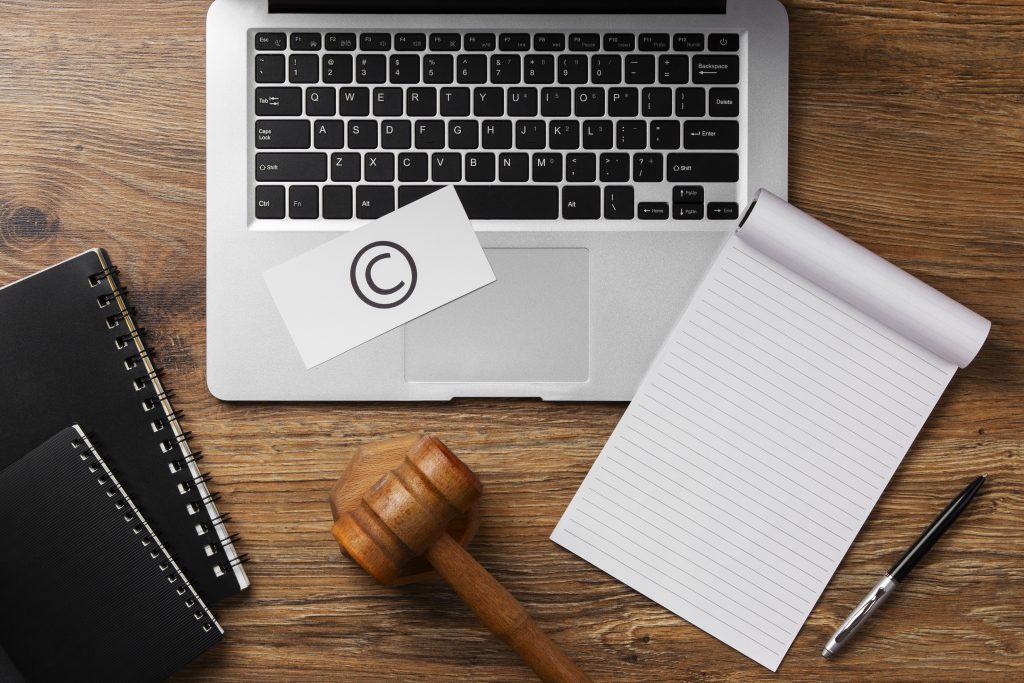
One of the greatest benefits of copyright is its term. To a person, the duration of protection is usually a lifetime or 70 years, which forms a legacy.
A trademark exists in the business world. It safeguards symbols or names, phrases or designs that denote the origin of the goods or services. It mainly aims at averting confusion among consumers in the market. The golden arches are an indication of McDonald’s. Adobe is a brand of certain software. This is the power of a trademark.
To enjoy the best national legal rights, you usually need to achieve the registration of your mark with the relevant government service, i.e., the USPTO in the United States.
The trademark rights are eternal, unlike the copyright, as long as you keep using the mark in the business and renewing it.

It is easier to understand the technicalities when laid out. Although there are differences between copyright and trademark, both of them belong to the general intellectual property; their duration, purposes, and registration procedures are quite different.
| Feature | Copyright | Trademark |
| Primary Goal | Protects original creative expression. | Protects brand identity and source. |
| Automatic Right? | Yes, upon creation of the work. | Limited “common law” rights exist. |
| Registration | Through the Library of Congress. | Through the USPTO. |
| Duration | Life of the author + 70 years. | Can last forever (if renewed). |
| Symbol | © | ™ or ® |
| Example | A fantasy novel series. | The name of the publishing house. |
The misinterpretation of copyright and trademark may prove expensive to the creators and business owners:
The difference is like having a roadmap to go through the thick forest of intellectual property. It guarantees that your work and brand are secure and respected.
Most entrepreneurs believe they have acquired a single form of protection, but having both copyright v. trademark may form an invincible shield to your business.
As an example, when you come up with a mobile game:
In doing so, nobody will be able to steal your creative work, and your competitor will never be able to mislead your audience by issuing a similar brand. It has a two-arm lock on your intellectual property.
Suppose you start a craft soda business called “Alpine Fizz.”
All these measures create a powerful intellectual property strategy.
Your brand and creative work are valuable investments, and protecting them early is one of the smartest moves you can make. Using copyright and trademark laws proactively turns your ideas into assets that are legally secure and built to last. It helps you protect your creations, defend your market position, and grow with confidence instead of uncertainty.
Want to secure your brand the right way? Let Trademark Swyft handle the entire trademark registration and filing process while you manage your important tasks.
Can a logo be both copyrighted and trademarked?
Yes. A logo can be protected by copyright as an original artistic design. It can also be protected by trademark if it is used to represent your business and identify your brand in the marketplace.
Is copyright registration mandatory?
No, copyright registration is not mandatory. However, registering your work gives you stronger legal protection and makes it much easier to enforce your rights if someone copies your content.
How long does trademark approval take?
Trademark approval usually takes several months to over a year, depending on the country and the filing process. If no objections or legal issues arise, the process is generally smoother and faster.
What are the typical cost differences?
Copyright filing is usually less expensive. Trademark filing can cost more because it often involves trademark searches, filing fees, and long-term maintenance to keep the registration active.
Can I trademark a common phrase?
Yes, but only if the phrase is used in a unique way to identify your specific goods or services. The phrase must function as a brand identifier, not just a general or descriptive statement.
